What Are Common Signs That a Driveway Needs Repair?
Your driveway is more than just a place to park your car, it’s one of the first things people notice about your property and a key feature that adds to its kerb appeal. A well-kept driveway can last for many years, but over time, exposure to vehicles, weather conditions, and natural wear can take its toll. If left unattended, small issues can quickly turn into costly repairs or even complete replacement. That’s why it’s essential to recognise the early warning signs that your driveway needs repair. Addressing problems promptly not only extends the lifespan of your driveway but also keeps it looking attractive and safe to use.
1. Cracks on the Surface
Cracks are one of the earliest and most visible signs of damage. They can appear in concrete, tarmac, and block paving driveways.
What causes cracks?
- Natural ground movement and settlement
- Freeze-thaw cycles in winter (water expands when frozen)
- Heavy vehicle loads
- Ageing materials that lose flexibility
Why you shouldn’t ignore them:
Small cracks might seem harmless at first, but they allow water to seep in. Over time, water erodes the base layer and causes larger, structural cracks.
Repair tip:
Hairline cracks can often be sealed or filled easily. Larger cracks may need professional resurfacing to prevent spreading.
2. Potholes Forming
Potholes are more than just unsightly, they can damage tyres and create a tripping hazard.
What causes potholes?
- Water infiltration under the driveway surface
- Repeated freezing and thawing cycles
- Heavy traffic stressing weakened spots
Why you shouldn’t ignore them:
Left untreated, potholes get bigger and compromise the entire driveway structure. Repairs become more extensive and costly the longer they are left.
Repair tip:
Small potholes can sometimes be patched, but multiple or deep potholes often indicate that the sub-base needs repairing as well.
3. Fading or Discolouration
If your driveway looks dull, patchy, or faded, it may be a sign of material breakdown.
What causes fading?
- Prolonged exposure to UV rays from sunlight
- Oil and fuel spills from vehicles
- Weathering over time
Why you shouldn’t ignore it:
While fading doesn’t always affect structural strength, it indicates the protective surface is wearing away. That means your driveway is more vulnerable to cracks, erosion, and staining.
Repair tip:
Pressure washing, resealing, or resurfacing can restore appearance and add protection against further damage.
4. Drainage Issues
Pooling water on your driveway is a warning sign that something is wrong with the surface or base.
What causes drainage problems?
- Poor initial installation with incorrect slope
- Settlement or sinking of the sub-base
- Blocked or damaged drainage channels
Why you shouldn’t ignore it:
Standing water weakens the surface, encourages moss and algae, and eventually leads to cracks and potholes.
Repair tip:
Improving drainage may involve re-levelling sections of the driveway, adding proper drainage systems, or resurfacing.
5. Uneven or Sunken Areas
Driveways should remain smooth and level. If you notice dips, raised areas, or uneven surfaces, it’s a clear sign of sub-base problems.
What causes sinking?
- Poorly compacted base material during installation
- Soil erosion beneath the driveway
- Heavy loads concentrated in one area
Why you shouldn’t ignore it:
Uneven driveways are not only unattractive but can cause water pooling, further surface cracking, and even trip hazards.
Repair tip:
Sunken areas often need excavation and re-laying with a stronger, compacted base.
6. Weed Growth and Loose Edges
If weeds are sprouting through cracks or edges are crumbling away, it’s a sign that the driveway structure is weakening.
Why it matters:
- Weeds force cracks wider over time
- Loose edges allow water to seep underneath
- Left unchecked, the surface deteriorates quickly
Repair tip:
Using a sealant or jointing compound prevents weed regrowth. Crumbling edges should be reinforced or replaced to keep the structure stable.
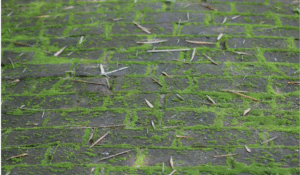
7. Excessive Moss, Algae, or Stains
Driveways in shaded or damp areas often develop moss, algae, or dark staining.
Why it matters:
- Moss and algae make surfaces slippery and unsafe
- Stains from oil and fuel indicate porous or unprotected surfaces
- Poor drainage usually worsens the problem
Repair tip:
Regular cleaning helps, but persistent growth may mean resealing or improving drainage is needed to prevent it returning.
8. Ageing Driveway
Even without visible cracks or potholes, an old driveway may still need repair or replacement.
Typical lifespan by material:
- Tarmac: 15–20 years
- Concrete: 25–30 years
- Block paving: 20–25 years (with re-sanding)
- Resin: 20+ years (with correct installation)
If your driveway is reaching the end of its natural life, investing in timely repairs can help extend it, but in some cases, a full replacement may be more cost-effective.
How to Decide Between Repair and Replacement
Not every issue means you need a brand-new driveway. Here’s a quick guide:
- Repair is usually enough if…
- Cracks are small and isolated
- Drainage issues are localised
- The driveway is less than 10–15 years old
- Replacement may be better if…
- Large potholes or widespread cracks are present
- The driveway has poor drainage throughout
- The base structure is failing
- The driveway is over 20–25 years old
Final Thoughts
Your driveway plays a vital role in the look and functionality of your property. Spotting problems early, from small cracks and fading to larger potholes or drainage issues, can save you money and prevent safety hazards.
If you notice any of these common signs, it’s wise to seek expert advice. Professional contractors can assess whether repairs will be sufficient or if a full replacement is the smarter option.
For homeowners in Dorset, Driveways Weymouth provides reliable, professional driveway repair and installation services. With expert guidance, you can restore your driveway to a safe, attractive, and long-lasting condition.