What UK Safety Standards Apply to Garden Path Construction?
Building a safe garden path matters. A well-built path adds beauty and function. But poor design, wrong materials or bad drainage make it unsafe. In this article, we will cover UK safety standards for garden paths, what rules you must follow, what many overlook, and how Driveways Weymouth can help you do it right in Weymouth.
1. Why Safety Standards for Paths Are Important
Garden paths are more than decoration. They guide foot traffic, help prevent slips and falls, and protect your home’s structure. When standards are ignored, accidents happen. Surfaces become slippery, edges trip hazards, water pools, or paths move under weight.
Safety also ties to legal compliance. If someone is injured, or a building inspection is done, having standards met can protect you from liability. Standards ensure durability, safety, and weather resistance. Moreover, complying means fewer repairs over time. A path built without attention to safety will likely require more fixes. So building well from the start saves money and keeps people safe.
2. Key UK Regulations That Affect Garden Paths
Several UK regulations and guidelines dictate how a garden path should be built. They include:
- Building Regulations Part H: covers drainage and waste water. It requires that surface water from paved areas goes into an acceptable system.
- Permeable surfacing guidelines / Permitted Development rules: the guidance states that driveways or paved areas over a certain size must use permeable materials or direct rainwater to permeable areas to avoid planning permission.
- NHBC standards: for new build paths and drives they set minimal thickness, stable base, proper drainage, and gradients.
- LabC / Technical Manuals: for paving/driveways, structural support, damp proofing, and ground stability. These set technical requirements for material, base, edge restraints.
These rules ensure you build a garden path that is safe in wet weather, resists frost, drains properly, and supports weight without shifting.
3. Materials, Construction & Surface Considerations
Choosing materials matters a lot. Safety relies on grip, strength, and fit. Some of the considerations:
- Surface slip-resistance: Use non-slip textures or finishes especially in shady, damp areas. Smooth stone or polished slabs can be dangerous. Add grip or rough finish to avoid slips.
- Thickness and base support: The path must have a solid base. For light pedestrian use, a certain thickness might suffice, but in wet soil or where weight moves (wheelbarrow etc.), thicker base and stronger sub-base are needed. Sites like Wade Building Supplies suggest ~75–100mm concrete thickness for standard-duty paths.
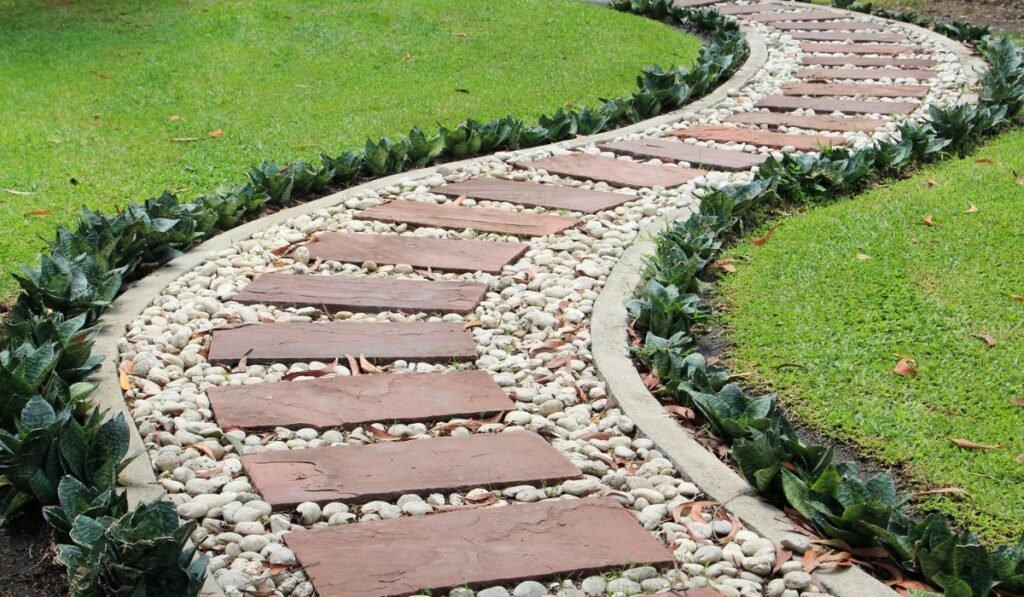
- Edge restraints: Paths need edging to prevent edges from spreading, shifting, or cracking. Edging keeps the path shape intact and supports safety.
- Joint spacing and expansion: Paths expand and contract with weather. Joints must be placed to control cracking. Use expansion joints or flexible joint materials where needed.
4. Drainage & Groundwater Rules You Must Follow
Water is a major risk. Poor drainage causes pooling, slippery surfaces, frost heave, and path failure. Here are rules and standards for drainage:
- Approved Document H – Part H of Building Regulations demands rainwater drainage be managed so water does not leak into houses or flood surfaces.
- SuDS (Sustainable Drainage Systems) standards require runoff be controlled, filtered, and often infiltrated into ground or stored. Paths over large areas may need special soakaways or permeable surfaces.
- Permeable surfaces or directing water to green areas: The planning rules for front garden paving say that if the surface is not permeable and over 5 square metres, planning permission is likely needed.
- Soakaway design: Small soakaways have simpler requirements; larger ones must comply with drainage standards such as BS EN 752‑4 or BRE Digest guidelines.
5. Slope, Gradient & Accessibility Safety
Safety includes making path slopes comfortable and accessible. Walking up or down steep paths can be dangerous. Standards cover:
- Gradient limits: Paths shouldn’t be so steep that walking becomes difficult or hazardous, especially when wet. For accessible paths, limit slopes to manageable gradients (often ≤1:12 for ramps; lower for general paths). While not always specified in every guideline, many pathways in new builds follow such limits.
- Edge visibility and contrast: Edges of steps or changes in level must be visible. Use contrasting materials or edging to help people avoid trips.
- Step design: If the path includes steps, standard rise and going dimensions matter. Typical rise ~150‑170mm, going (tread depth) ~280‑425mm, consistent across steps. Handrails might be required if the ascent is large.
6. Durability, Maintenance & Safety over Time
Building safe paths is not a one‑time job. Maintenance matters. Here are standards and tips:
- Material weather resistance: Use materials that resist frost, water, UV. Stone, concrete, resin-bound surfaces should be fit for local climate (Weymouth has sea air, frost, rainfall).
- Regular inspection: Look for loose slabs, cracked edges, pooling of water. Fix early to avoid accidents.
- Cleaning & surface maintenance: Remove moss, algae, leaves , wet surfaces become very slippery. Treat or clean surfaces regularly.
- Repair standards: When replacing slabs or patching, match existing materials, ensure the base is rebuilt properly so the repaired area does not sink.
7. Planning Permission & Local Authority Rules in Weymouth
Often people think garden paths are simple; but local rules sometimes apply:
- Permitted development rights: Many garden paths fall under permitted development, but size, location, or whether drainage is affected can trigger permission.
- Coastal environment considerations: In Weymouth, being near sea, you must consider corrosive environment, salt exposure, wind; materials and fastening must resist corrosion.
- Local drainage approvals: The local council may require that paved areas drain properly to avoid run‑off affecting public paths or sewers.
8. What Driveways Weymouth Offers: Expert Services
To make sure your garden path is safe, long‑lasting, and compliant, Driveways Weymouth offers several expert services:
- Path design & planning: advice on materials, slope, drainage, safety features
- Construction & installation: laying base, setting slabs, ensuring edge restraints
- Permeable & resin bound paths: surfaces that let water through, avoiding run‑off issues
- Re‑surfacing & repairs: fixing cracks, resetting slabs, replacing worn parts
- Safety finishing: non‑slip coatings, contrast edges for steps, tactile surfaces where needed
- Maintenance & cleaning: regular, scheduled cleaning; inspection of drainage and slip hazards
Their team in Weymouth ensures that every path meets UK safety standards, looks good, lasts long, and is safe in rain, frost, and salt air.
9. Common Mistakes & What Many Blogs Miss
Many resources talk about planning permission or material choices. But they often miss:
- Salt & coastal corrosion effects: near sea, metal fixings, grout, and materials deteriorate faster. This needs special material choices.
- Thermal expansion & contraction in seaside climates: white or light stone can heat a lot under sun; wet/cold cycles can cause movement.
- Safety for elderly, children or disabled: contrast on edges, gentle slopes, handrails when needed.
- Lighting & visibility: paths used at dusk/night need safe lighting, reflective or low‑level to avoid trips.
10. Summary & Best Practice Checklist
Here’s a checklist to ensure your garden path in Weymouth is safe and compliant:
| What to Check | Why It Matters |
| Surface grip / anti‑slip texture | Prevents falls when wet |
| Solid base & edging | Prevens shifting, cracking |
| Proper drainage (Permeable or soakaway) | Avoids water pooling, frost damage |
| Gradient & slope within safe limits | Safe walk, prevents slips |
| Material durable for coastal climate | Resists corrosion, wear |
| Consistent step dimensions & contrast edges | Prevent tripping hazard |
| Regular maintenance & cleaning schedule | Keeps path safe over time |
Final Thoughts
Garden paths may seem small projects, but safety standards matter. UK building regulations like Part H, NHBC standards, and local planning laws ensure your path drains correctly, resists damage, and stays safe. If you live in Weymouth and need professional help, Driveways Weymouth can guide you from design to completion. They understand local climate, material demands, and safety rules. With them, your path will not just look good, it will be safe to walk on for years.